Heel & Foot Pain · Updated September 2026
Heel Pain Relief Oil
There is one detail that tells you what heel pain is before any scan does. The first few steps out of bed are the worst of the entire day. By mid-morning it has eased. Then it returns after you have been sitting a while. That pattern points to the plantar fascia, the thick band along the sole of your foot, and it changes what you should be massaging.
₹549 per 100 ml₹699 · Cash on Delivery across India
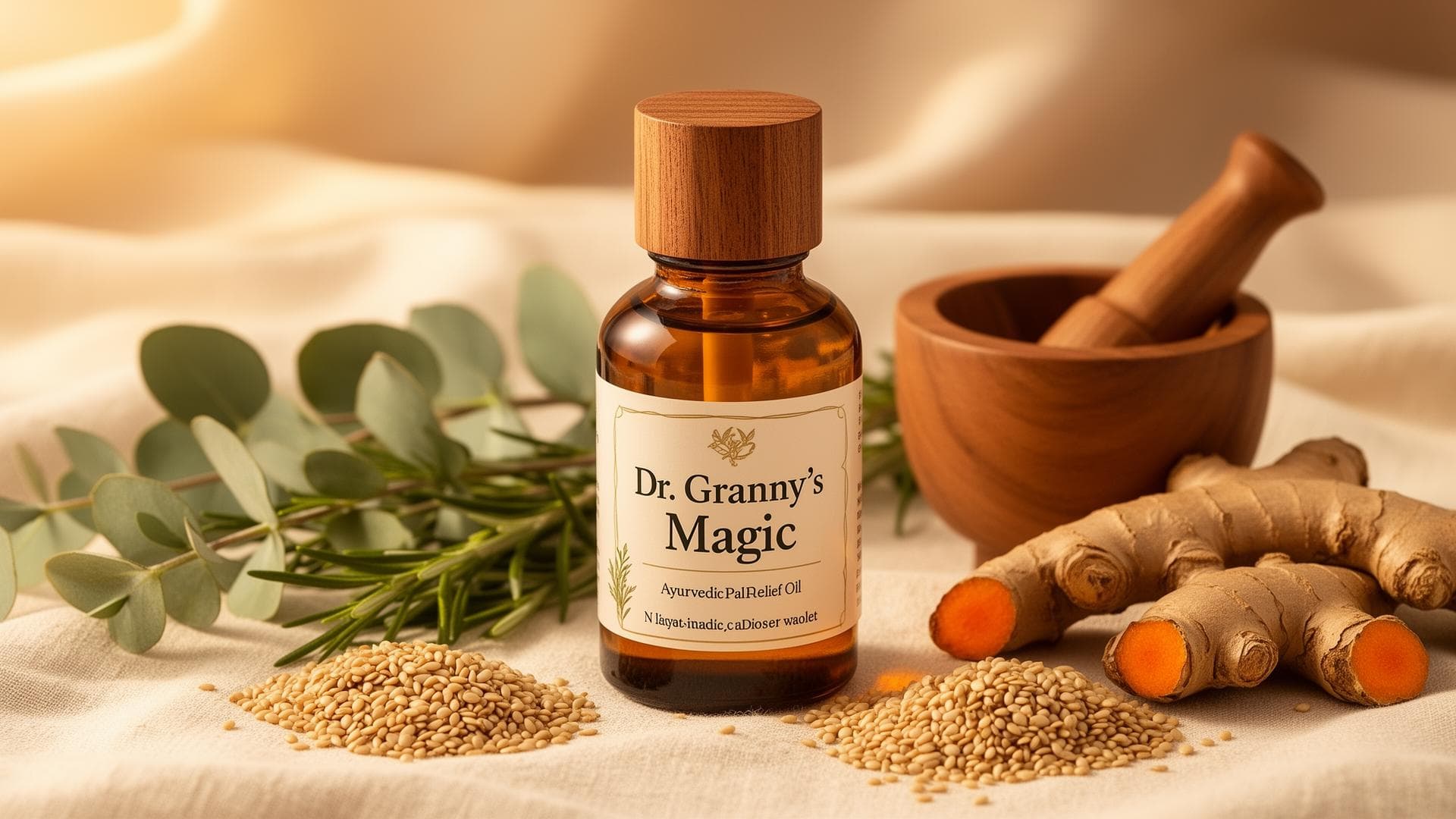
Heel Pain Relief Oil: the short answer
For heel pain, massage Dr. Granny's Magic into the sole of the foot from the heel towards the toes using your thumbs, then work the calf muscle above it, for 3–5 minutes twice daily. Apply at night and again before your first steps in the morning, while still sitting on the bed. The calf matters as much as the heel because a tight calf pulls on the heel. Cash on Delivery across India at mukorossi.in.
Why the first step of the day is the worst one
The plantar fascia runs from your heel bone along the sole to the base of your toes. While you sleep, your foot rests pointing slightly downward and the fascia shortens. Your first step stretches it suddenly under your full body weight. That is the sharp pain under the heel that people describe as standing on a stone.
It settles once you have walked around because the tissue lengthens with use. It comes back after sitting for the same reason it hurt in the morning. Plantar fasciitis accounts for the large majority of heel pain complaints in adults.
The calf is part of the problem
This is the bit most people miss. A tight calf muscle pulls upward on the heel bone through the Achilles tendon, and the plantar fascia attaches to the underside of that same bone. Tighten one end and you load the other. Heel pain is very often associated with a tight calf.
So a foot-only massage is half a routine. Work the sole, then work the calf. People who add the calf usually notice the difference within the first week.
Who tends to get it
Standing jobs are the obvious group. Retail floors, hospital shifts, kitchens, security duty, teaching. Runners are the other, where it accounts for a meaningful share of running injuries. Then there is everyone who spent a long time in flat, unsupportive footwear on hard floors.
Indian homes add their own factor, which is the amount of time spent barefoot on tile or stone. That is not a reason to wear shoes indoors, but it is a reason to be deliberate about the daily foot routine.
What to pair the oil with
Stretching the plantar fascia is the best-supported self-care step for first-step pain, and it costs nothing. Sit down, pull your toes back towards your shin with your hand, and hold. Calf stretches against a wall do the other half.
The order that works is oil first, stretch second, because warm tissue stretches more comfortably. Dr. Granny's Magic gives you that warm window with Dashamula, Nirgundi, Eucalyptus and Camphor in a sesame and mustard oil base, and Ayurveda has a name for this specific routine, padabhyanga, foot massage.
How to massage your heel and foot
- 1
Sit on a chair or the edge of the bed and rest the foot on your opposite thigh so you can reach the sole comfortably.
- 2
Warm 5–10 ml of oil between your palms.
- 3
Using both thumbs, press and stroke from the heel towards the toes along the sole. Firm is fine here, the sole tolerates more pressure than most areas. Two minutes.
- 4
Work small circles right into the centre of the heel, then along the inside edge of the sole where the fascia is tightest.
- 5
Move up to the calf. Stroke upward from the ankle towards the back of the knee with the flat of your hand. A minute or two.
- 6
While the foot is still warm, pull your toes back towards your shin with your hand and hold for 30 seconds. Repeat three times.
- 7
Apply at night before bed, and again in the morning while you are still sitting, before you take your first steps.
For external use only. Patch test on the inner wrist before first use if your skin is sensitive.
What's inside the bottle
A blend of classical Ayurvedic herbs in a sesame and mustard oil base.
Eucalyptus Oil (Nilgiri Tel)
Contains 1,8-cineole, studied for its cooling sensation and ability to ease the perception of muscle and joint discomfort when applied topically.
Sesame Oil (Til Tel)
Classical Ayurvedic carrier oil. Research suggests topical sesame oil massage may help reduce the severity of pain in limb trauma and support skin nourishment.
Smilax China (Chob Chini)
Traditionally used in Ayurveda for joint comfort. Phytochemical studies show anti-inflammatory and antioxidant activity attributed to its steroidal saponins.
Ashwagandha (Withania somnifera)
Adaptogenic herb with documented anti-inflammatory properties. Clinical reviews support its use for easing joint stiffness and improving musculoskeletal comfort.
Neem Oil
Rich in nimbidin and fatty acids. Research indicates topical neem may soothe irritated skin and supports its traditional use over sore joints.
Peppermint
Menthol in peppermint oil produces a cooling effect that activates skin TRPM8 receptors, providing fast-acting relief sensation when massaged onto sore muscles.
Kapoor (Camphor) & Sahajan (Moringa)
Camphor stimulates nerve endings to create a warm-cool counter-irritant effect; moringa adds vitamin E and oleic acid shown to support skin and joint tissue health.
Methi Dana (Fenugreek Seed)
Contains diosgenin and mucilage. Studies highlight its anti-inflammatory action that may help calm everyday joint and muscle aches.
See a doctor if
- The heel pain began immediately after a fall or a jump from height
- You heard or felt a snap at the back of the ankle
- The heel or foot is swollen, red or warm to touch
- You have numbness or burning spreading across the sole
- The pain is not improving at all after several weeks of self-care
A massage oil is for daily comfort. It is not a replacement for a diagnosis, and it is not intended to diagnose, treat or cure any disease.
Heel & Foot Pain questions, answered
Which oil is best for heel pain and plantar fasciitis?
+
A warm sesame-based Ayurvedic oil suits the sole well, since the skin there is thick and takes a firmer massage. Dashamula with Nirgundi and a warming agent is the usual profile. Dr. Granny's Magic is made this way and is used for both the sole and the calf.
Why does my heel hurt most in the morning?
+
The plantar fascia shortens overnight while your foot rests pointing downward, then gets stretched suddenly under your weight on the first step. That is the classic pattern for plantar fasciitis.
Should I massage the heel or the calf?
+
Both. A tight calf pulls on the heel bone that the plantar fascia attaches to, so working only the foot leaves half the cause untouched.
How long does heel pain take to settle?
+
It generally improves with consistent self-care over weeks rather than days, and a minority of people have symptoms that persist longer. If yours is not improving, see a doctor or physiotherapist about footwear and orthotics.
Can I use this if I stand all day at work?
+
Yes, this is one of the most common reasons people use it. Apply before your shift and again when you get home. Elevating your legs for ten minutes afterwards helps as well.
Will the oil help a heel spur?
+
A heel spur is a bony growth and needs medical assessment. What an oil massage supports is the daily comfort of the surrounding soft tissue. Get the diagnosis confirmed before assuming which one you have.
Order with Cash on Delivery
Pay when it reaches you. 30-day returns.
Related reading
Standing Jobs · 7 min
Leg Pain After 8-Hour Standing Shifts: A Recovery Guide
Retail, hospitality, factory floor — if you stand all day, your legs deserve more than a quick wash and bed.
Read the guideHow-To · 7 min
Abhyanga at Home: A Beginner's Guide to Ayurvedic Self-Massage
The 3,000-year-old self-care practice you can do in your bathroom in 10 minutes. Here's exactly how.
Read the guideReferences
Sources for the medical background described on this page.